
A tear is a diagnosis. It is not automatically a surgery.
The rotator cuff is the group of tendons that stabilizes the shoulder joint. A tear means one or more of those tendons has been damaged, either suddenly in a single incident or gradually through years of repetitive movement. Either way it costs you the same things: lifting, rotating, and using the arm without discomfort.
Many small and partial tears respond to physical therapy. A structured program can reduce the pain, rebuild the strength, and restore the function without an operation. What does not work is waiting. Left alone, a tear tends to worsen, and it takes function and joint health with it, so early treatment is the part that actually changes your outcome.
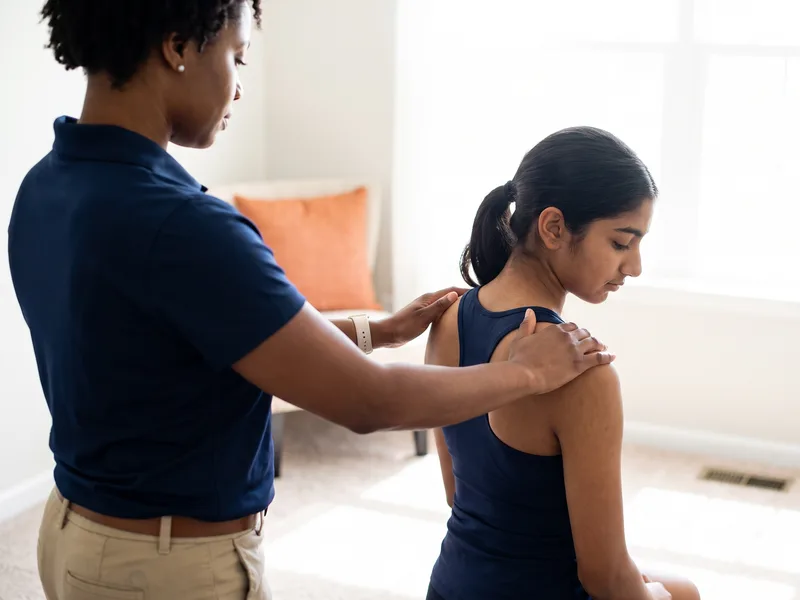
Signs of a rotator cuff tear.
Symptoms range from mild discomfort to significant movement restriction. These are the ones worth an evaluation.
Pain Reaching Overhead
Lifting or reaching above shoulder height hurts. This is usually the first thing people notice and the last to come back.
Shoulder and Arm Weakness
The arm feels unreliable rather than just sore. Carrying, pushing, and holding something out in front all get harder.
It Wakes You Up
Difficulty sleeping because of the shoulder, especially lying on that side. Sleep loss is often what finally sends people in.
Stiffness and Lost Range
The shoulder moves less than it used to, in one direction or all of them, and the loss keeps creeping.
Popping or Clicking
A pop or click you can feel when the shoulder moves, often with rotation.
Mild Discomfort You Keep Ignoring
Not every tear announces itself. A nagging ache that is not resolving is still worth an evaluation, because early treatment prevents further damage.
Four jobs, in order. Calm it, free it, load it, use it.
First we manage the pain and inflammation: hands-on manual therapy to improve circulation and relieve stiffness, heat or ice where it helps, and clear guidance on which movements to modify so you stop straining the tendon between visits. Then we get the motion back, with gentle stretching, joint mobilization, and postural work that takes unnecessary stress off the joint.
Then the part that actually holds: targeted strengthening for the rotator cuff itself, scapular stabilization so the shoulder blade does its share, and resistance training that rebuilds real functional strength. Last comes movement pattern correction and exercise built around your sport or your job, progressing until you can use the arm fully without pain. If you do end up having surgery, this same work still has to happen, and we handle that side too.
Exercise is essential to a cuff recovery, but it has to be the right exercise. The wrong loading makes a tear worse.
Schedule Your Appointment
No referral needed. Utah has direct access to physical therapy, and we are in network with 11+ carriers plus Medicare.
Your first visit runs about an hour, with your Doctor of Physical Therapy in the room the whole time. Tell us everything. Leave with a plan.
You’re all set.
We’ll reach out within one business day to confirm your appointment. If you need to speak with us sooner, call us directly.