
Not acupuncture. A western, anatomy-based technique.
The needle is ultra-thin and it goes straight into the trigger point, the tight and irritable knot of muscle fiber that is actually generating your pain. The muscle twitches, then lets go. Spasm and tension drop, circulation and oxygen return to the tissue, nerve irritation settles, and range of motion comes back.
Acupuncture works from meridian theory. Dry needling works from anatomy and from what your physical therapist found on examination, so the needle goes where the dysfunction is. Utah physical therapists were not permitted to perform it at all until 2014, when Dr. Matthew Nelson finished five years of work with the state and his professional organization to change the law. He has taught the technique since 2009, is an instructor for Aspire OMT, and has taught over 75 continuing education courses.
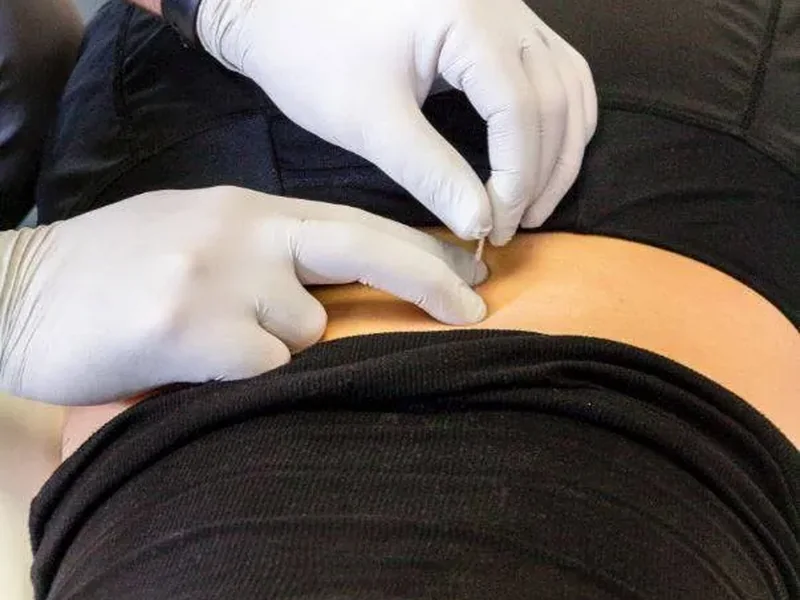
Brief discomfort, then the muscle lets go.
Find the Trigger Point
Your therapist assesses the area by hand and identifies the active trigger points. That examination is what decides where the needle goes, and it happens before anything else.
Release It
Thin needles are placed into the targeted muscle to release the tension. Some people feel a mild twitch or a deep ache. It passes quickly.
Move On It
Released tissue gets put through movement in the same appointment. Needling opens the window. Exercise is what keeps it open.
In his words.
"This has been one of the most beneficial experiences for me with my back issues (herniated disc for 2 years). I've been doing dry needling for about 3 months and seen a drastic decrease in pain."Davis P. · Google Review
Schedule Your Appointment
No referral needed. Utah has direct access, and we are in network with 11+ carriers plus Medicare.
Your first visit runs about an hour with your Doctor of Physical Therapy. Come in, tell us everything, leave with a plan.
You’re all set.
We’ll reach out within one business day to confirm your appointment. If you need to speak with us sooner, call us directly.