
Your neck is where you feel it. It is not always where it started.
Neck pain, or cervicalgia, is discomfort in the upper spine and the muscles, tendons, and ligaments wrapped around it. The usual drivers are familiar: forward head posture from long hours on a screen, muscle strain from overuse or stress or a movement pattern that was never right, an injury like whiplash or a fall or a hit in sport, or degenerative change such as arthritis and disc issues.
It does not stay a neck problem for long. It makes desk work harder, exercise less appealing, and sleep worse, and left alone it tends to get worse rather than better. Physical therapy is non-invasive, and it goes after the cause instead of masking what you feel.
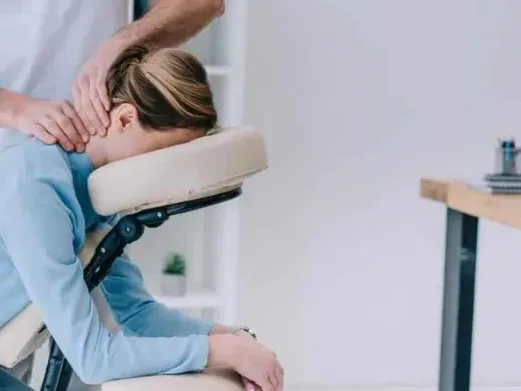
Neck pain rarely stays in one place.
The nerves that leave the cervical spine run into the head, the shoulders, and the arms. That is why symptoms show up well away from the sore spot.
Stiffness That Restricts Movement
Checking a blind spot, looking over your shoulder, or tilting your head fully to one side stops being automatic.
Dull Ache or Sharp Pain
Some days it is a background ache. Other days it is sharp and radiating, and it decides what you do next.
Headaches From the Neck
Headaches that start in the cervical spine rather than the head, and get worse when the neck moves.
Tingling Into the Shoulder or Arm
Tingling or numbness extending out of the neck into the shoulder, the arm, or the fingers.
Waking Up Stiff
Persistent stiffness first thing in the morning, often tied to sleeping position and the hours before it.
Pain From Screen Posture
Pain that builds through a workday of forward head posture and eases for a moment when you sit up straight.
We measure the neck before we treat it.
Most clinics assess a neck by hand and by feel. We own a Multi-Cervical Unit, which tests cervical strength and range of motion objectively, in every direction, and gives us a number to work from instead of an impression. That same unit is used to rehabilitate whiplash and stubborn neck cases, and it shows you exactly what changed.
From there the plan is built on what the testing found: joint mobilization to improve movement, soft tissue work and trigger point dry needling to release tension, strengthening for the muscles that gave out, and correction of the posture and ergonomics that started it. Your Doctor of Physical Therapy does all of it, the whole appointment.
No referral needed. Utah has direct access to physical therapy, and we are in network with 11+ carriers plus Medicare.
What our patients say.
"Wow, I went in with some awful neck and shoulder pain. Bridget did a thorough assessment then honed in exactly where I needed the relief."Susan G. · Neck and Shoulder Pain
Schedule Your Appointment
No referral needed. Utah has direct access to physical therapy, and we are in network with 11+ carriers plus Medicare.
Your first visit runs about an hour, with your Doctor of Physical Therapy in the room the whole time. Tell us everything. Leave with a plan.
You’re all set.
We’ll reach out within one business day to confirm your appointment. If you need to speak with us sooner, call us directly.