
The most mobile joint you own pays for that mobility in stability.
The shoulder moves further in more directions than any other joint, and that freedom is exactly why it is prone to instability and injury. The usual causes are rotator cuff problems such as tendonitis, tears, and impingement, arthritis wearing on the joint, tendon inflammation from overuse, muscle strain from repetitive movement or sudden impact, and postural imbalance pulling the shoulder out of position.
Mild discomfort sometimes settles with rest and a change in activity. Pain that keeps coming back usually will not, because rest does nothing about the mechanics that caused it. That is the part physical therapy is for.
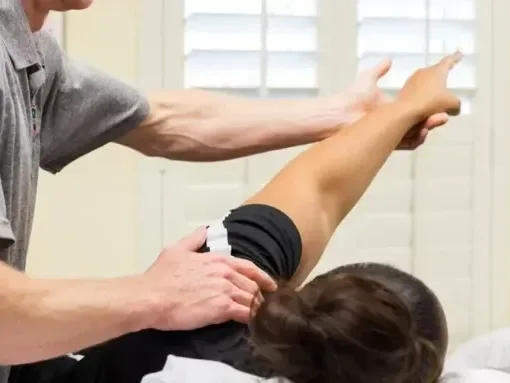
What the shoulder stops letting you do.
Which movements provoke it, and when it bothers you most, tells your therapist a great deal before a hand is laid on it.
Pain When You Move the Arm
Sharp or persistent pain that shows up the moment the arm goes where you need it to go.
Trouble Lifting and Reaching Overhead
Difficulty lifting objects or getting through anything that happens above shoulder height.
Discomfort at Night
Pain that shows up in bed, especially when you roll onto the affected side.
Limited Range and Stiffness
The shoulder no longer goes everywhere it used to, and it feels stiff getting there.
Noticeable Weakness
The arm gives out on tasks it used to handle. Significant weakness is worth getting evaluated.
Pain That Will Not Settle
Discomfort that has outlasted rest and activity changes, which usually means something mechanical needs treating.
Calm it down, give the motion back, then build what holds it.
First the pain and inflammation. Manual therapy releases the muscle tension and improves how the joint moves, with heat or cold and modalities such as ultrasound or electrical stimulation where they help. Dry needling is available when tension is not letting go.
Then the rest of it. Targeted stretching and joint mobilization to open the range back up, resistance training for the rotator cuff and the muscles supporting it, scapular strengthening to fix the posture underneath, and a home program plus straight guidance on how to move at work so you keep what you gained.
No referral needed. Utah has direct access to physical therapy, and we are in network with 11+ carriers plus Medicare.
Schedule Your Appointment
No referral needed. Utah has direct access to physical therapy, and we are in network with 11+ carriers plus Medicare.
Your first visit runs about an hour, with your Doctor of Physical Therapy in the room the whole time. Tell us everything. Leave with a plan.
You’re all set.
We’ll reach out within one business day to confirm your appointment. If you need to speak with us sooner, call us directly.