
A concussion is a function problem, not a structure problem.
A concussion changes how the brain works, not how it is built. Rapid acceleration or violent deceleration puts shear forces through the tissue, cellular metabolism is disrupted, and the excitatory and inhibitory signals that normally balance each other stop balancing. The headaches, the fog, and the sensitivity to light and sound come out of that imbalance.
Because the problem is functional, it is trainable. Most of it settles as the chemistry normalizes. What tends not to settle on its own is balance, eye movement control, tolerance for exertion, and the neck, which took the same force the head did. Those four are exactly what a Doctor of Physical Therapy tests and retrains.
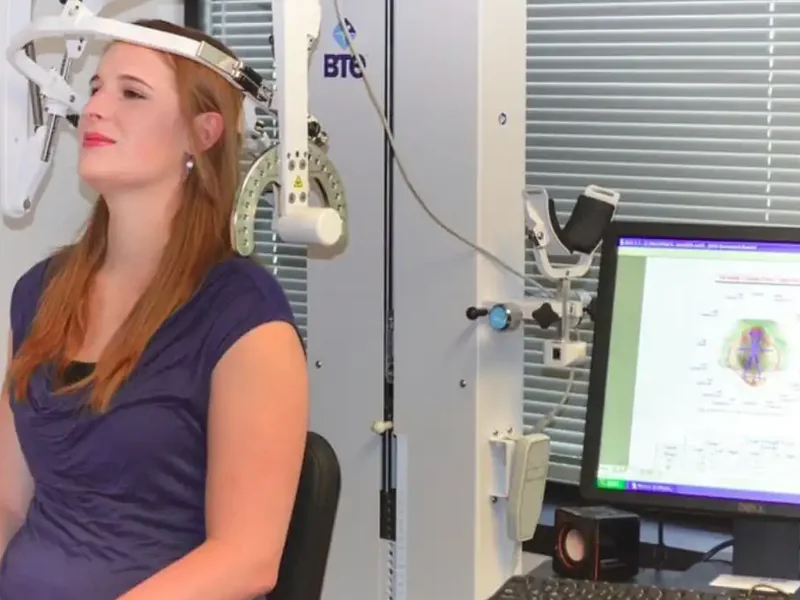
Concussion symptoms rarely show up one at a time.
They cluster into physical, cognitive, sleep and mood changes. Sorting them tells us which system to test first, and which ones physical therapy can actually change.
Headaches
The most common physical symptom after a concussion, and often the one that lingers longest once everything else has quieted down.
Dizziness and Unsteadiness
A spinning or floating feeling, or the sense that the room moves half a beat behind you when you turn your head.
Visual Changes
Trouble tracking a line of text, difficulty shifting focus between near and far, or eye strain that builds through the day.
Sensitivity to Light and Noise
Grocery stores, fluorescent lighting, and busy rooms become exhausting. Sunglasses indoors is a common tell.
Brain Fog and Memory Lapses
Haziness, loss of focus, and dropped details. It shows up fastest in school and at work, where sustained attention is the job.
Sleep and Mood Changes
Exhausted but restless, hard to fall asleep or stay asleep, and shorter tempered than usual. Both are part of the injury, not a character flaw.
Rest is the first few days. It is not the plan.
Care at Dynamic Physical Therapy starts by separating the systems instead of treating "concussion" as one thing. We test balance, gaze stability and eye movement control, cervical mobility and tension, and how much exertion you can tolerate before symptoms rise. That assessment is what the plan is built from.
Then we retrain, in order and on purpose. Gaze stabilization and habituation for the vestibular system. Saccade and visual tracking work for the eyes. Manual therapy for the neck, which absorbed the same force your head did. Subthreshold aerobic work that raises your ceiling without pushing you through it. Every provider here is a Doctor of Physical Therapy, and when your symptoms point somewhere outside physical therapy, we tell you and help you get to the right person.
No referral needed. Utah has direct access to physical therapy. Most insurances accepted, and you see the same Doctor of Physical Therapy every visit.
Schedule Your Appointment
No referral needed. Most insurances accepted.
Your first visit runs about an hour with a Doctor of Physical Therapy who stays for all of it. Tell us what happened, what still is not right, and leave with a plan.
You’re all set.
We’ll reach out within one business day to confirm your appointment. If you need to speak with us sooner, call us directly.